
True Equality Means Freedom, and Affirmative Action Is About Freedom

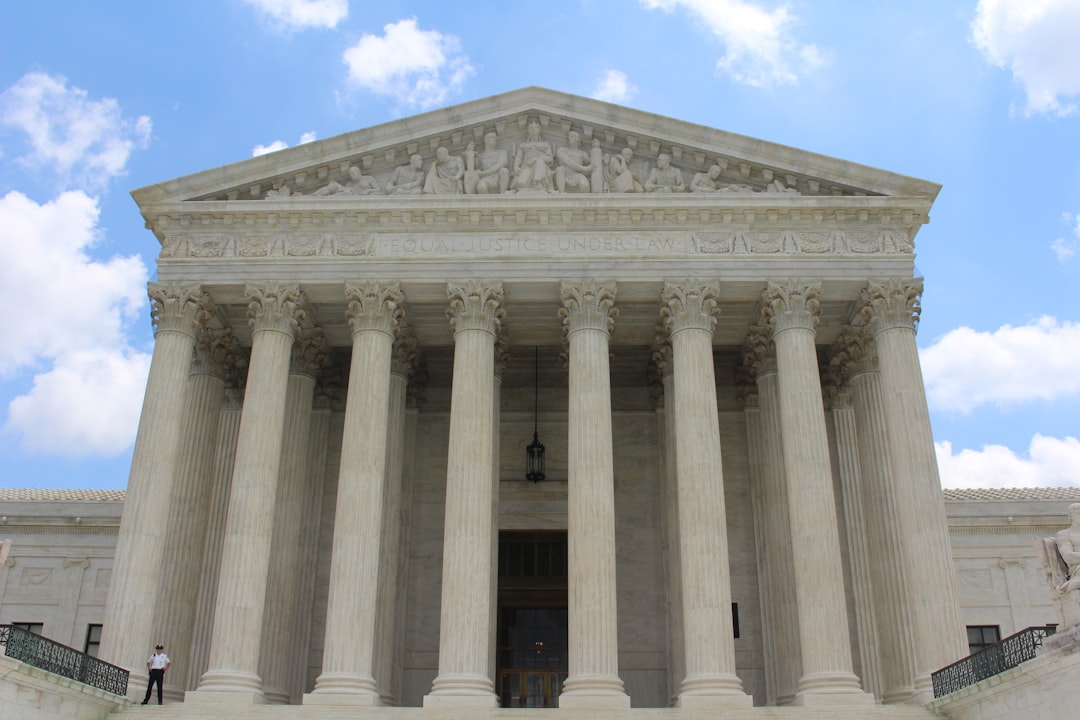
As I predicted, the conservative Supreme Court ruled against affirmative action. Chief Justice John Roberts, who wrote the opinion, argues that affirmative action violates the Equal Protection Clause of the 14th amendment. He also argues that the UNC and Harvard admissions programs “lack sufficiently focused and measurable objectives warranting the use of race, unavoidably employ race in a negative manner, involve racial stereotyping, and lack meaningful end points.” Essentially, Chief Justice Roberts advocates for a sort of equality that is “colorblind” and rooted in treating people as “the same”.
Justice Jackson’s Dissent and a Problem with the Roberts Majority Opinion
Justice Ketanji Brown Jackson, in her dissent (pg 209), pushes back against Roberts’s arguments, pointing out that the 14th amendment was written and intended to be a way to remedy racism, injustice, and inequities against Black people perpetuated by white people. She also pushes back against the idea that affirmative action is employing race in a negative manner by proposing that race actually informs the use of affirmative action.
Justice Jackson’s dissent helps identify multiple problems with Chief Justice Roberts’s arguments. One significant problem is his use of equality. Equality is a difficult word to navigate because what does equality even look like after centuries of oppression? How can we treat everyone the same when there was never a time when all people were treated equally? How can we be “colorblind” in a country where race informs every policy, practice, and procedure? Chief Justice Roberts wants to treat people the same while ignoring all the past and present factors that made it impossible to do so.
Justice Jackson instead presents a different view of equality, that directly considers racial disparities and how they came to be. She believes we need to rely on evidence and experts to help “level the playing field and march forward together, collectively striving to achieve true equality for all Americans.”
Roberts’ view of equality entails sameness and a false notion of colorblindness. However, Jackson’s view of equality entails something different: freedom. And, as she describes, affirmative action is actually about helping people reach that freedom.
The Meaning of Freedom
In her dissent, Jackson provides details about a meeting between General William Tecumseh Sherman, Secretary of War Edwin Stanton, and Black leaders in Savannah Georgia on January 12, 1865. Garrison Frazier, the group spokesperson for twenty African American Baptist and Methodist ministers, was asked what freedom means to him. Frazier said freedom is “placing us where we could reap the fruit of our own labor, and take care of ourselves . . . to have land, and turn it and till it by our own labor.”
Jackson contends that the gaps we have today are because “freedom was denied far longer than it was ever afforded” and that “UNC’s holistic review program pursues a righteous end—legitimate ‘because it is defined by the Constitution itself. The end is the maintenance of freedom.’”
Justice Jackson sees freedom as important, necessary, and directly related to equality. But what does freedom really mean? There are various views of what freedom is and looks like, and I believe there are three forms of freedom that are relevant here:
Freedom From/Against: The freedom to not be imprisoned, enslaved, oppressed, or marginalized
Freedom To Do/Act: The freedom to act, speak, and think as one wants
Freedom to Become: The freedom of self-actualization, the ability to realize or fulfill one’s talents or potential.
Garrison Frazier, in his definition of freedom, indicated a similar view of what freedom looked like for him. He expressed the desire to be in a position where he would be able to work and get the proceeds from that work (something slavery prevented), own property and do what he wants on that land, and utilize that land according to his desire and ability.
Freedom Denied for Black Americans Past and Present
But this freedom that Frazier wanted didn’t exist, and it has long been denied. Jackson’s dissent relies on history and shows that Black people were denied their “freedom from/against” and their “freedom to do/act”, and because of that, they were left unable to self-actualize and accomplish their “freedom to become”.
Jackson cites the history of enslavement in this country, where Black people were dragged in chains and sold as property. It was illegal to teach enslaved people to read, and they could be sold, maimed, or killed at any point. She references the bravery of Black Americans during the Civil War as well as Senator John Sherman’s defense of the proposed 14th amendment, where he said:
“We are bound by every obligation, by [Black Americans’] service on the battlefield, by their heroes who are buried in our cause, by their patriotism in the hours that tried our country, we are bound to protect them and all their natural rights.”
Jackson specifically references the Framers of the 14th amendment and their intent in creating the Reconstruction Amendments, which was to right wrongs done by white people against Black people. The 14th amendment specifically overturned the Supreme Court’s Dred Scott decision, which declared that Black people, whether free or enslaved, were not citizens. It also overturned Black Codes, which were put in place to restrict civil rights for African Americans and force them to work for former enslavers.
In addition to the 14th amendment, there were the Civil Rights Acts of 1866 and 1870 as well as the 1866 Freedmen’s Bureau Act. They were often seen as complementary to the 14th amendment. In an amicus brief to this case, various history and law professors outlined how the Framers saw these acts and the 14th amendment through a race conscious lens. The brief stated that:
The Civil Rights Acts of 1866 and 1870 and the Freedmen’s Bureau Act illuminate the Reconstruction Framers’ understanding of the Fourteenth Amendment’s equal protection guarantee in two different and complementary respects. The Civil Rights Acts shed light on how Congress understood its power to regulate the States through race-conscious measures consistent with the Amendment. And the Freedmen’s Bureau Act reveals that where Congress exercised its own power, it saw no principled or legal problem with employing ameliorative racial classifications.
Justice Jackson also highlights the “white backlash” to these efforts, citing President Andrew Johnson’s veto of a bill that would secure all citizens the same rights as white citizens because it “discriminate[d]…in favor of the negro.” She also points out that the Supreme Court invalidated Congress’s attempt to enforce Reconstruction Amendments in the Civil Rights Act of 1875, where the court stated, “there must be some stage . . . when [Black Americans] tak[e] the rank of a mere citizen, and ceas[e] to be the special favorite of the laws.” These arguments made in the late 1800s sound very similar to the arguments that Chief Justice Roberts makes in the present. Chief Justice Roberts, like those in the late 1800s, seems to view attempts to repair and redress wrongs done to Black people as discrimination against others. Roberts also ignores that the 14th amendment (and complementary acts) were created with race-conscious remedies in mind.
Justice Jackson then references the lone 1883 dissent made by Justice John Marshall Harlan I in “The Civil Rights Cases”, which said that:
“What the nation, through Congress, has sought to accomplish in reference to [Black people] is—what had already been done in every State of the Union for the white race—to secure and protect rights belonging to them as freemen and citizens; nothing more.”
This goes back to Garrison Frazier’s notion of freedom, where he said that freedom was being in a situation where he could have land, take care of the land, and get the benefit from that land. He wanted the freedom against slavery and oppression, the freedom to do and act as he wished, and the freedom to become what he wanted to be. That was legally and systemically denied to Black people in this country. Justice Jackson points out that enslaved Black people built great wealth, but it all went to enslavers, and freedmen wanted the opportunity to control their labor and build their own wealth. However, this was not easily done as white southerners would refuse to sell land to Black people, and some state laws even prevented it. So Black people were often forced into sharecropping, which felt very similar to slavery. At the very least, they were denied important notions of freedom, “freedom from” and “freedom to do/act”.
Jackson goes on to explain how freedom was denied further with laws created against vagrancy (criminalization for those who failed to work for white people), hunting, fishing, hitchhiking, and more. And when there weren’t laws, there was the threat of violence. From there, we saw the emergence of Jim Crow, which she calls “a comprehensive scheme of economic exploitation to replace the Black Codes, which themselves had replaced slavery’s form of comprehensive economic exploitation.” And as Jim Crow was oppressing Black people, Justice Jackson mentions that the federal government was “giving away land” in the West. She writes:
Meanwhile, as Jim Crow ossified, the Federal Government was “giving away land” on the western frontier, and with it “the opportunity for upward mobility and a more secure future,” over the 1862 Homestead Act’s three quarter-century tenure. Black people were exceedingly unlikely to be allowed to share in those benefits, which by one calculation may have advantaged approximately 46 million Americans living today.
Justice Jackson rightfully notes that Black people persisted despite these obstacles. However, that doesn’t negate that these obstacles were direct barriers to freedoms: freedom from oppression, freedom to do/act, and freedom to become. Jackson also shows how oppression and exclusion spread throughout cities. Racially exclusionary zoning policies led to high prices for subpar housing, and many banks would not lend money to Black people. When they did, they charged exceptionally large interest rates.
The Home Owners’ Loan Corporation (HOLC) was started by the U.S. Congress in June of 1933. In 1935, the Federal Home Loan Bank Board asked the HOLC to look at 239 cities to indicate the level of security for real estate. Areas were labeled by color, and this led to “redlining”, where mortgage and business loans were denied to racialized minorities and those with lower income. In her dissent, Jackson shares that “‘[b]etween 1934 and 1968, 98% of FHA loans went to white Americans’, with whole cities (ones that had a disproportionately large number of Black people due to housing segregation) sometimes being deemed ineligible for FHA intervention on racial grounds.” She gives various examples, showing that between 1930 and 1960, fewer than 1% of mortgages in the country were awarded to Black people, and Black people were “[l]ocked out of the greatest mass based opportunity for wealth accumulation in American history.”
Jackson points out that the government already practiced a form of affirmative action that excluded Black people writing that:
“…in so excluding Black people, government policies affirmatively operated—one could say, affirmatively acted—to dole out preferences to those who, if nothing else, were not Black. Those past preferences carried forward and are reinforced today by (among other things) the benefits that flow to homeowners and to the holders of other forms of capital that are hard to obtain unless one already has assets.”
Jackson also mentions other times when Black people were excluded, such as being denied the benefits of the GI Bill, being denied the ability to participate in the consumer credit market, and enduring other alleged “race-blind” policies that still led to race-based harms. In addition, she addresses wealth gaps that existed (and still exist) on every income and education level as well as education and health gaps that exist.
Not only were there wealth, education, and health gaps that existed, but from 1880-1965, there were forms of direct disenfranchisement that impacted Black people. There was the threat of violence that went unpunished and unchecked. There was also frequent election fraud and failure to count votes. In addition, poll taxes, literacy tests, restrictive registration practices, and white primaries existed throughout the South. The 24th Amendment finally abolished poll taxes in federal elections but not until 1964. The Voting Rights Act of 1965 prohibited poll taxes in state elections. Literacy tests were not abolished in the South until the Voting Rights Act of 1965, and they were not abolished nationwide until 1970. White primaries, where only white people could participate in certain primaries, did not end until 1953.
The Voter Rights Act of 1965 had a big impact on enfranchisement, as it not only suspended discriminatory practices but also said federal approval was needed for proposed changes to voting laws/procedures in jurisdictions that had previously used tests to determine eligibility. It also expanded in the 70s to protect voting rights for non-English speaking citizens. It was extended multiple times, but it was significantly weakened with Shelby County v Holder in 2013.
Chief Justice Roberts (yes, that the same one) ruled that Section 4b (a formula that determines which jurisdictions are subjected to preclearance based on their history of discrimination in voting) was unconstitutional, and he rendered Section 5 (requiring states and local governments to obtain federal preclearance before implementing any changes to voting laws/practices) essentially useless. Roberts wrote that: “the country has changed, and while any racial discrimination in voting is too much, congress must ensure that the legislation it passes to remedy that problem speaks to current conditions.” However, voting rights were impacted and upended immediately after the decision he wrote. Soon after the Shelby County v. Holder decision, Texas, Mississippi, and Alabama passed stricter voter ID laws, nearly 1000 polling places in predominantly Black communities were closed within 5 years of the decision, early voting had been cut/limited, voter purges occurred, and gerrymandering worsened.
For centuries, Black people in the United States have had to endure enslavement and oppression as well as laws, policies, and practices that prohibited them from exercising their freedoms, building wealth, or building a life that they wanted to live. The dream that Garrison Frazier expressed in Savannah was still a dream deferred for future generations of Black people.
How History Informs the Need for Affirmative Action and Race-Conscious Admissions
To show the impact that generations of racism and oppression have on future generations, Justice Jackson makes a comparison of two hypothetical students, John and James, who want to attend UNC.
In her example, both John and James can trace their family’s history back to North Carolina in 1789, when UNC was founded. Both have an interest in honoring their family’s legacy by attending UNC, the state’s flagship institution. However, the difference is that John is white and would be a seventh-generation graduate from UNC whereas James is Black and would be a first-generation graduate from UNC. Justice Jackson asks if the “race of these applicants properly [plays] a role in UNC’s holistic merits-based admissions process?”, and to answer the question, she states that we must look at history.
Jackson mentions that it is not John’s fault that he would be a seventh-generation graduate from UNC, but it is also not James’s (or his family’s) fault that he would be a first-generation graduate from UNC. And she believes that UNC should be able to consider why.
Jackson shows how each generation informs the next:
“Most likely, seven generations ago, when John’s family was building its knowledge base and wealth potential on the university’s campus, James’s family was enslaved and laboring in North Carolina’s fields. Six generations ago, the North Carolina “Redeemers” aimed to nullify the results of the Civil War through terror and violence, marauding in hopes of excluding all who looked like James from equal citizenship. Five generations ago, the North Carolina Red Shirts finished the job. Four (and three) generations ago, Jim Crow was so entrenched in the State of North Carolina that UNC “enforced its own Jim Crow regulations.” Two generations ago, North Carolina’s Governor still railed against “‘integration for integration’s sake’”—and UNC Black enrollment was minuscule. So, at bare minimum, one generation ago, James’s family was six generations behind because of their race, making John’s six generations ahead.”
Justice Jackson identifies the flaw in disregarding racial disparities and how those influence where students are today, and she calls disregarding them an “affront to the dignity of those students for whom race matters.” She writes that disregarding racial disparities and history “also condemns our society to never escape the past that explains how and why race matters to the very concept of who “merits” admission.” Justice Jackson states clearly that this race conscious approach ADVANCES the promise of the 14th amendment, and considering race as one of many factors is important to “best assess the entire unique import of John’s and James’s individual lives and inheritances on an equal basis.”
So, why is affirmative action so important? Because it is about freedom. For hundreds of years, Black people in the United States have been denied freedom, whether it’s due to slavery, Jim Crow, or other forms of oppression and marginalization. Black people have also been denied the freedom to act, speak, live, and be who they wish. As pointed out in the John and James example, James and his family have been denied these opportunities for generations whereas John and his family have not. However, in this generation, they both have the goal of going to their flagship state school, and attending UNC would provide both with the freedom to realize and fulfill their talent and potential.
Affirmative action would allow institutions to take affirmative steps to consider race, the barriers to access, and the legacy of racism, oppression, and marginalization that impacts every facet of life and potentially multiple generations. Affirmative action offers a small opportunity for redress so that students have the freedom to realize and fulfill their talent and potential. It offers an opportunity to pursue justice and remedy past and present harms so that James has just as much of an opportunity as John.
True equality is not sameness or color-blindness because our country has never treated everyone the same. True equality means considering disparities, how we got to where we are, and how freedom has long been denied. The Framers of the 14th amendment meant for it to be a race conscious remedy. Affirmative action and the holistic review programs that are race conscious operate in support of the 14th amendment, not against it. These programs pursue what Justice Jackson notably labels as “a righteous end”, which is the “maintenance of freedom”.
Affirmative action is about providing justice and freedom, freedoms that have long been denied and only recently seem attainable. Our country owes a debt to generations of people it harmed, but rather than support a small portion of restitution, the majority of the Supreme Court has chosen to set our country back further by ignoring its own history and the impact of race and racism that is still felt today.